Bonsai Care
- Details
- Category: Carpinus
General Information
Hornbeam bonsai come in a variety of species. From the Betulaceae family of trees, this deciduous species is gracious with light green foliage and a smooth, muscle-like, grey colored bark. It is reportedly difficult to transplant from a field nursery.
Ironwood is a common name for hornbeam. The name ironwood comes from the ancient times when they used carpinus wood to build ships.
During spring, it produces wind-pollinated pendulous catkins flowers. Hornbeam is monoecious, meaning the male and female flowers are on sperate catkins, but on the same tree.
In general, the hornbeam is a slow growing tree. The leaves will turn yellow, orange and red in the fall and will turn brown when dry. The brown leaves will often stay attached in the winter season.
Six species are popular as bonsai. Two of them are known as Korean hornbeam, while one is known as the European Hornbeam or Common Hornbeam. Two are Japanese Hornbeam and one is the American Hornbeam.
- Details
- Category: Deciduous Bonsai
This article is focused on providing additional value, more details on deciduous bonsai care and reminding us of important details as provided in Bjorn Bjorholm's very instructional video.
- Details
- Category: Conifers
Hinoki Cypress- Chamaecyparis Obtusa:
- Pinching is done 2x a year, in early June and again in September
- Details
- Category: Pines
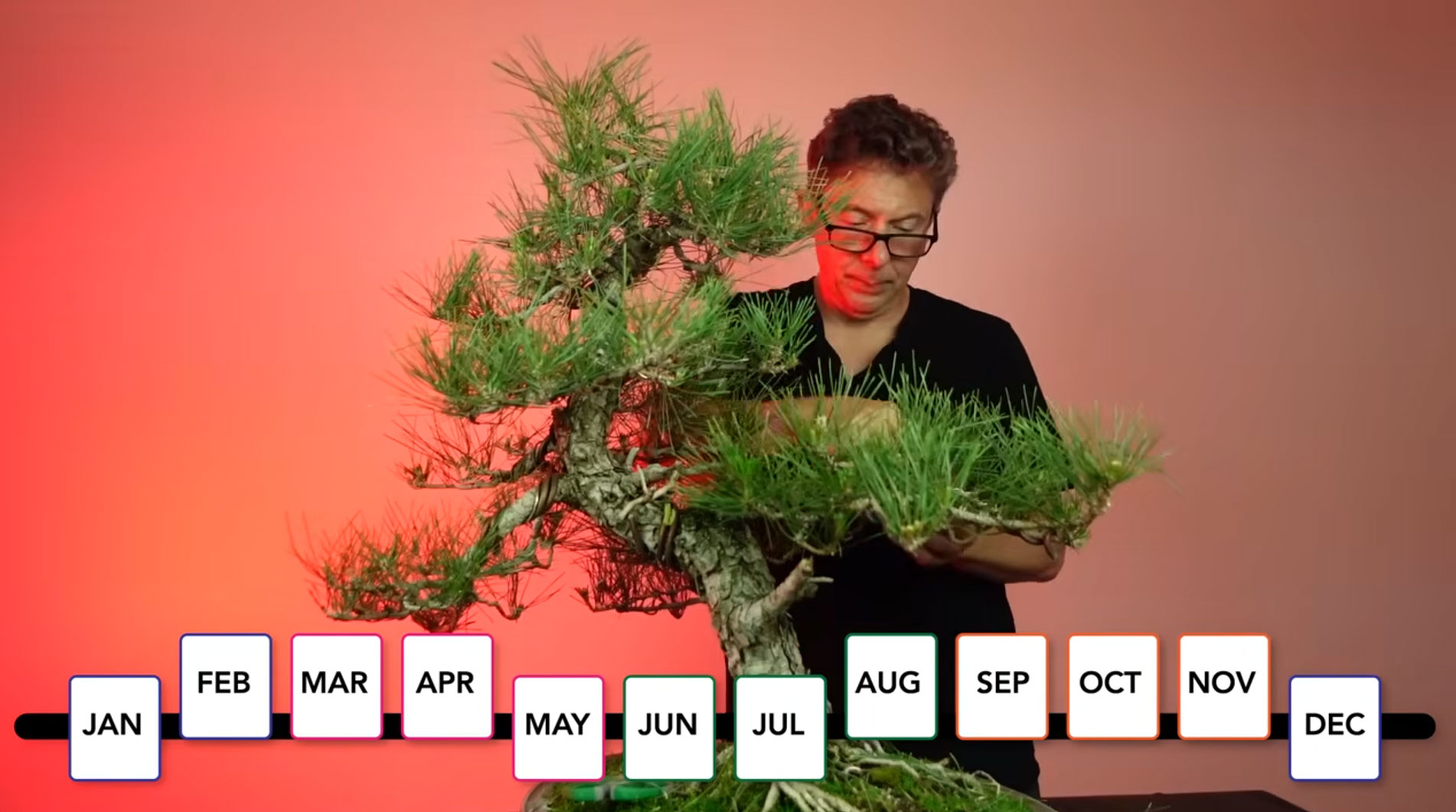
A picture tells more than 1000 words. This one shows you when to prune black pine needles and stop fertilizing (May in our northern hemisphere) and then when to start fertilizing again AFTER the new buds have formed and hardened off.
Courtesy of @MakeMoreBonsai
https://youtu.be/uE3L-DVHEug?si=rEgRe-XTPAYRfkQP
The idea of this article is that it grows, while sharing my research findings and insights in handling Japanese black pines (kuromatsu).